Independent knowledge base software guide Evidence-led Updated 2026

Knowledge Base Security and Compliance: Controls, Testing, and Audit Evidence
Knowledge base security and compliance require more than protecting the article editor. A defensible program identifies every copy and delivery path for the information, restricts access according to risk, tests whether the restrictions work, and preserves evidence showing who did what and when.
Security, privacy, compliance, and governance are related but different. Security manages risks to confidentiality, integrity, availability, authenticity, and resilience. Privacy addresses how personal information is processed and how that processing affects people. Compliance concerns the laws, contracts, standards, and internal requirements that apply. Governance assigns decisions, ownership, lifecycle rules, and accountability.
A vendor certificate or assurance report can support due diligence, but it does not make every customer configuration compliant. The organization still needs to classify its information, configure the service correctly, test its own access boundaries, manage integrations, and meet the obligations that apply to its data and activities.
This guide provides a vendor-neutral control and evidence method. It is general information, not individualized legal advice. Confirm applicable requirements and contract terms with qualified legal, privacy, security, and compliance owners.
Start with the knowledge base boundary, not a compliance badge
A secure scope includes more than published pages. Depending on the system, the knowledge base may also contain drafts, comments, previous versions, attachments, images, metadata, reader identities, group membership, search terms, analytics, feedback, notifications, exports, API responses, webhooks, connector credentials, logs, backups, caches, search indexes, embeddings, generated answers, and support records.
Map where each copy comes from, where it is stored, who can retrieve it, and how it is deleted. A confidential source document can become broadly visible through a copied article, a search snippet, a downloadable attachment, an export, a chat integration, or an AI-generated response even when the original repository is restricted.
The NIST Cybersecurity Framework 2.0 offers a useful risk-management structure. Its six functions—Govern, Identify, Protect, Detect, Respond, and Recover—are concurrent outcomes, not a product certification or a prescribed implementation.
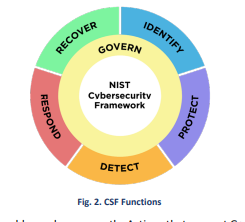
| NIST CSF function | Knowledge-base question | Example evidence |
|---|---|---|
| Govern | Who accepts risk, owns content classes, and approves exceptions? | Responsibility matrix, policies, exception approvals, supplier decisions. |
| Identify | Which sites, sources, copies, users, connectors, and data classes are in scope? | Asset inventory, data-flow map, audience matrix, subprocessor list. |
| Protect | How are identities, permissions, content changes, files, and secrets protected? | Configuration exports, access rules, MFA and SSO settings, publishing workflow. |
| Detect | Which events reveal misuse, unauthorized changes, or access-control failures? | Audit events, alerts, retrieval traces, access-denial records. |
| Respond | How will the organization contain disclosure, poisoning, or compromised integrations? | Incident playbooks, tickets, communication records, containment steps. |
| Recover | Can critical guidance and configuration be restored within the required business window? | Restore-test record, recovered-content checks, recovery responsibility assignments. |
The framework helps organize risk decisions but does not determine which laws or contractual commitments apply. Build the compliance layer after defining the real system and information flows.
Classify content, audiences, and delivery paths
Use information classes that reflect the consequences of disclosure or alteration. The exact labels belong to the organization, but the following example shows why one permission model does not fit every article.
| Content class | Typical audience | Primary concern | Often-overlooked copies |
|---|---|---|---|
| Public product help | Anyone | Integrity, availability, safe publishing, abuse controls. | CDN caches, search indexes, translations, copied snippets. |
| Authenticated customer guidance | Authorized customer accounts | Tenant separation and object-level authorization. | Direct links, email previews, exports, AI citations. |
| Internal employee procedures | Employees or approved contractors | Offboarding, department boundaries, stale instructions. | Chat integrations, browser extensions, mobile caches. |
| Partner-only material | Named partner organizations | Contractual scope and partner isolation. | Downloaded files, forwarded links, integration copies. |
| Restricted security runbooks | Security responders and designated administrators | Privileged access, integrity, auditability, emergency availability. | Search snippets, notifications, backups, AI chunks. |
| Compliance and audit evidence | Authorized auditors and control owners | Confidentiality, chain of custody, retention, and integrity. | Ticket attachments, shared drives, evidence exports. |
A label such as “Private” or “Confidential” is not an enforcement mechanism. Confirm that page access, direct links, files, search, APIs, integrations, exports, and AI retrieval all honor the classification.
A general-purpose knowledge base is also not a secrets manager. Passwords, API keys, signing keys, recovery codes, and similar credentials should follow an approved secrets-management workflow rather than appearing in ordinary articles or code samples.
Build a control baseline that can be tested
Identity and authentication
Give each human, service, connector, and emergency identity a distinct account. Avoid shared administrator or author logins. Apply strong authentication and MFA according to risk, and use SSO where it improves centralized control and offboarding.
Provisioning and authentication solve different problems. SSO authenticates a person through an identity provider. SCIM or another provisioning process can create, update, group, and deactivate accounts. Neither automatically decides which article, attachment, or export an authenticated user may access.
Test the complete joiner, mover, and leaver process. A transferred employee may need different groups before the old access is removed. A contractor’s expiration date should affect direct links, search results, exports, and integrations—not merely the main navigation.
Authorization and tenant separation
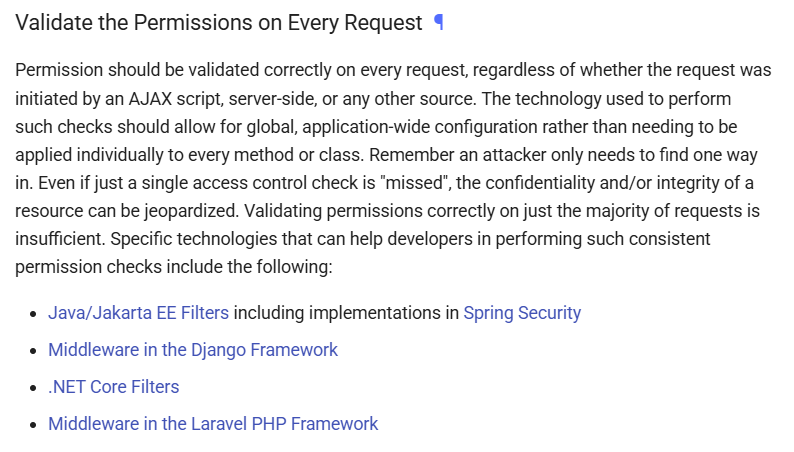
Authentication answers “Who are you?” Authorization answers “May this identity perform this action on this object?” Apply least privilege, deny access by default, and verify authorization on every protected request. The OWASP Authorization Cheat Sheet emphasizes validating permissions for every request rather than relying on hidden links or client-side presentation.
Separate reader, author, reviewer, publisher, auditor, integration owner, and platform-administrator capabilities where the risk justifies it. A person who can review a procedure does not necessarily need permission to change identity settings or export the entire library.
For customer or partner knowledge bases, test object and tenant boundaries. A user from customer A must not retrieve customer B’s page, file, snippet, search result, export, or generated answer. Include direct object identifiers and cached responses in the test.
Content integrity and publishing
Assign an accountable owner to each high-value topic and define who can draft, review, approve, publish, unpublish, archive, and restore it. Keep these states distinct:
- Last edited: someone changed the page.
- Last reviewed: an authorized person substantively checked it.
- Approved: the required decision-maker accepted it for use.
- Published: the selected version is available to its audience.
- Acknowledged: a reader confirmed receipt or understanding where that workflow is required.
Version history supports investigation and rollback but is not a substitute for backup or substantive review. Protect high-risk instructions from unauthorized changes, and test whether a restored version also restores the intended attachments, metadata, and permissions.
Data protection and file handling
Verify encrypted transport and storage, key-management responsibilities, attachment scanning, allowed file types, data minimization, and protection for backup and export files. Encryption reduces certain risks but does not fix excessive access, unsuitable retention, or an invalid processing purpose.
Check embedded content and linked files independently. An article may be restricted while a linked document is broadly shared, or the reverse. Confirm that every required asset works for an authorized reader and remains unavailable to a denied reader.
Logging and monitoring
Define which events support detection, investigation, and audit before selecting a product plan. The OWASP Logging Cheat Sheet recommends risk-based logging and highlights authentication events, authorization failures, administrative activity, configuration changes, sensitive-data access, and imports and exports.
For a knowledge base, candidate events include:
- Successful and failed sign-ins, MFA events, and suspicious session activity.
- User, group, role, guest, and permission changes.
- Publication, approval, unpublication, deletion, restoration, and ownership changes.
- Administrative access and break-glass account use.
- Bulk reads, restricted-resource access, and authorization failures.
- Exports, imports, API tokens, webhooks, and connector changes.
- AI source additions, removals, retrieval decisions, and permission failures.
Each event should contain enough context for its purpose, such as timestamp, actor, action, target, source, outcome, and a correlation identifier. Avoid recording passwords, access tokens, encryption keys, raw sensitive content, or unnecessary personal data.
A generic activity feed is not automatically audit evidence. Verify event coverage, time synchronization, integrity protection, retention, search, export, alerting, and the plan required for SIEM access.
Availability, recovery, and incident response
Identify knowledge that is operationally critical, such as outage procedures or security-response guidance. Select recovery objectives according to business impact rather than adopting an unsupported universal target.
Keep these mechanisms separate:
| Mechanism | Primary purpose | What it does not automatically prove |
|---|---|---|
| Version history | Review or restore earlier content versions. | Recovery of the complete service, files, permissions, and configuration. |
| Export | Create a portable or reviewable copy. | A complete backup or lossless migration. |
| Backup | Preserve data and configuration for recovery. | That restoration has been tested successfully. |
| Disaster recovery | Restore the service after a major disruption. | That every integration and business process will work without validation. |
| Retention policy | Preserve or remove records according to defined requirements. | Immediate deletion from every backup and downstream copy. |
Run restoration exercises with defined checks: article content, attachments, metadata, identities, permissions, audit history, links, and search behavior. Maintain incident playbooks for unauthorized disclosure, mass deletion, poisoned content, compromised connectors, exposed credentials, and unavailable critical guidance.
Test every delivery path, not only the editor
For each audience and content class, perform both an allowed and denied test. An administrator’s successful preview does not establish that ordinary users receive the correct access.
| Path | Positive test | Negative test | Evidence to retain |
|---|---|---|---|
| Direct page URL | Authorized reader can open the intended version. | Denied reader receives no protected content. | Test record, sanitized screenshots, access event. |
| Search | Authorized query returns the relevant page. | Restricted titles and snippets do not leak. | Search-result capture and user identity. |
| Attachment | Authorized reader can open the required file. | Direct file URL is blocked for the denied reader. | File-access event and permission record. |
| Export | Approved role can export the intended scope. | Ordinary reader cannot export protected collections. | Export approval, audit event, protected output location. |
| API or integration | Authorized token receives permitted content. | Revoked or lower-privilege token is denied. | Request ID, authorization outcome, connector configuration. |
| Email or chat notification | Message contains an appropriate link or approved excerpt. | Restricted content is not exposed in the message body or preview. | Sanitized notification example and audience rule. |
| Mobile or browser extension | Access matches the web application. | Offline cache does not persist after access removal beyond the documented behavior. | Device test record and cache-clearing evidence. |
| AI answer | Authorized user receives an answer from approved sources. | Denied user receives no restricted claims, citations, or snippets. | Source IDs, authorization trace, redacted response. |
Repeat the access checks after a role change, contractor expiration, account suspension, document reclassification, connector change, and source deletion. Revocation that works only after a long, undocumented cache period can still create material risk.
Map controls to obligations without overclaiming
Applicable requirements depend on the organization, processing activity, data, jurisdiction, contracts, and role. Use laws, frameworks, and assurance reports to identify relevant obligations and evidence—not as interchangeable badges.
| Source | What it contributes | What to inspect | What it does not prove by itself |
|---|---|---|---|
| NIST CSF 2.0 | A voluntary set of cybersecurity-risk outcomes for organizations of different sizes and sectors. | Current and target profiles, ownership, priorities, and evidence. | Legal compliance, certification, or correct product configuration. |
| NIST Privacy Framework | A voluntary method for identifying and managing privacy risk. | Processing context, privacy outcomes, mappings, and organizational profiles. | Compliance with every privacy law. |
| ISO/IEC 27001 | Requirements for establishing, maintaining, and continually improving an information security management system. | Certificate scope, edition, entity, locations, dates, certification body, and accreditation. | That ISO issued the certificate or that every product and customer configuration is covered. |
| SOC 2 | An examination of a service organization’s system and controls relevant to selected Trust Services Criteria. | System description, categories, report type, period or date, opinion, exceptions, subservice organizations, and complementary user-entity controls. | A certification or automatic compliance for the customer. |
| GDPR | Legal requirements for qualifying personal-data processing within its scope. | Purpose, minimization, accuracy, retention, security, roles, processor terms, rights, subprocessors, deletion, and transfers. | That encryption, an EU region, or a vendor badge satisfies every obligation. |
| HIPAA | Requirements for regulated entities and qualifying PHI or ePHI activities within scope. | Risk analysis, access, audit, integrity, authentication, transmission security, workforce controls, evaluation, and business-associate arrangements. | That a product is universally compliant or endorsed by HHS. |
GDPR and privacy obligations
Where the GDPR applies, Article 5 establishes principles including purpose limitation, data minimization, accuracy, storage limitation, integrity and confidentiality, and accountability. Search queries, analytics, identity information, comments, support records, and AI prompts can process personal data even when the articles themselves are not about individuals.
Article 32 requires appropriate technical and organizational measures based on risk and includes a process for regularly testing, assessing, and evaluating their effectiveness. Article 28 addresses controller-processor arrangements and sufficient guarantees from processors.
Determine processing roles, purposes, data categories, subprocessors, retention, rights handling, deletion or return, and international-transfer arrangements with qualified privacy and legal owners. Do not treat data residency as the same thing as transfer compliance or full GDPR compliance.
HIPAA and cloud knowledge bases
HIPAA applies only when the organization, activity, and information fall within its scope. The HHS Security Rule summary addresses access control, audit controls, integrity, authentication, and transmission security for ePHI.
HHS explains in its cloud-computing guidance that a cloud provider creating, receiving, maintaining, or transmitting ePHI on behalf of a covered entity or business associate can be a business associate even if it only stores encrypted ePHI and lacks the encryption key. The parties generally need an appropriate business-associate agreement, and the regulated organization must still conduct its own risk analysis and risk management.
A vendor’s willingness to sign a BAA is one contractual condition, not evidence that the selected plan, integrations, user configuration, retention, and workflow are suitable for every HIPAA use case.
SOC 2 and ISO/IEC 27001 vendor claims
SOC 2 is an attestation examination, not a certification. The AICPA SOC resources describe reports concerning controls relevant to security, availability, processing integrity, confidentiality, or privacy.
A Type 1 report addresses control design as of a specified date. A Type 2 report also addresses operating effectiveness over a period. For either, confirm that the knowledge-base service, region, features, and relevant subservice organizations are inside the described system. Review exceptions and complementary controls the customer must operate.
ISO/IEC 27001:2022 defines requirements for an information security management system. If a vendor claims certification, inspect the certified entity, services, scope statement, locations, dates, edition, issuing certification body, and accreditation. ISO states that it does not perform certification or issue certificates; external certification bodies perform that work.
Perform vendor and deployment due diligence
Evaluate the deployment model before comparing brand claims. Managed SaaS, self-hosted software, and a knowledge layer connected to existing repositories assign different responsibilities. Self-hosting can increase control over infrastructure while also making the customer responsible for hardening, updates, monitoring, backups, availability, and incident response.
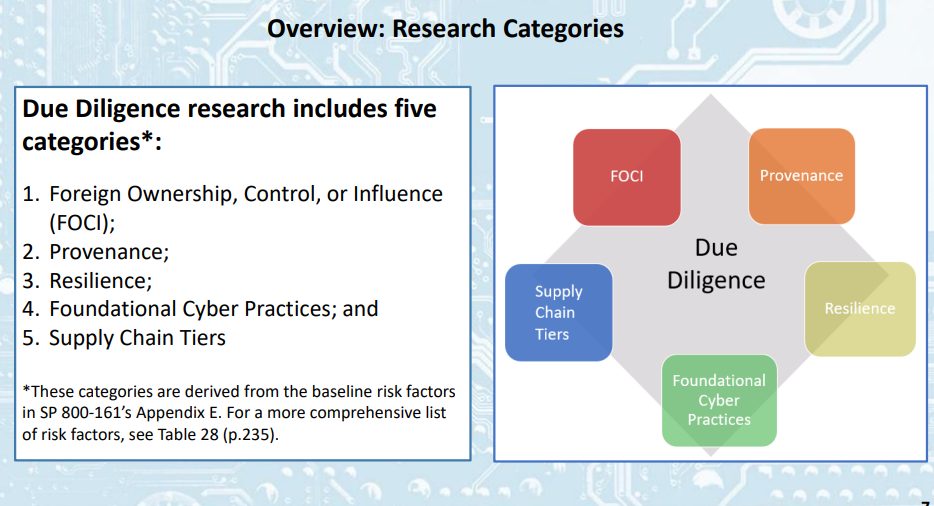
The NIST Cybersecurity Supply Chain Risk Management Due Diligence Assessment Quick-Start Guide frames supplier due diligence as research used to make informed acquisition and ongoing-system decisions. Apply that approach to the exact service, edition, region, and contract under consideration.
| Due-diligence area | Evidence or answer to request | Knowledge-base-specific question |
|---|---|---|
| Service and assurance scope | Architecture summary, SOC report, ISO certificate, bridge coverage, penetration-test summary. | Does the scope include the knowledge service, search, files, APIs, integrations, AI features, and selected region? |
| Identity and authorization | MFA, SSO, SCIM, role model, guest controls, service accounts, emergency access. | Which plan supports the reader, author, reviewer, publisher, and auditor separation you require? |
| Auditability | Event catalog, retention, export, API or SIEM integration, integrity and alerting controls. | Are permission changes, exports, restricted reads, administrative actions, and AI retrieval decisions logged? |
| Data protection | Encryption scope, key management, attachment controls, malware handling, secret-management boundaries. | Are files, backups, search indexes, exports, and AI stores covered? |
| Privacy and contracts | DPA, BAA where relevant, subprocessor list, locations, transfer terms, deletion and return terms. | Do search analytics, support access, and AI providers process personal or regulated data? |
| Resilience | Backup scope, recovery architecture, restoration testing, service commitments, incident process. | Can pages, files, permissions, metadata, and configuration be restored and verified? |
| Vulnerability management | Secure-development information, disclosure policy, remediation process, dependency governance. | How are vulnerabilities in the platform, connectors, and mobile or browser clients communicated? |
| Exit and deletion | Export formats, termination assistance, deletion schedule, backup expiry, legal-hold handling. | Can the organization retrieve content and identify remaining copies after termination? |
| AI processing | Model provider, training policy, retention, regions, subprocessors, deletion, permission enforcement. | Does generated-answer access match the source permissions at retrieval time? |
Verify controls at the subscription level. SSO, SCIM, audit-log APIs, private spaces, data residency, customer-managed keys, retention controls, or BAA availability may require a higher plan or negotiated contract. Do not combine entry-tier pricing with enterprise-only security features.
Create a written responsibility matrix identifying what the vendor, customer administrator, identity provider, content owner, integration owner, security team, and legal or privacy function must operate. A feature available in the product is not a control until someone configures, monitors, and tests it.
Control integrations, exports, search, and shadow copies
Trace information beyond the main website. Common secondary paths include Slack or Teams, email, widgets, mobile apps, browser extensions, APIs, webhooks, translation services, analytics, session replay, CDN caches, backup systems, AI providers, and administrator support tools.
For each path, answer four questions:
- Audience: Does it enforce the same reader and tenant boundaries as the source?
- Lifecycle: How quickly do source changes, revocation, retention, and deletion propagate?
- Evidence: Are reads, exports, failures, and configuration changes recorded?
- Ownership: Which system is authoritative, and where must a correction be made?
Treat exports as a high-risk capability. Verify who may create them, their content scope, the logging event, the destination, encryption, retention, and deletion. A user who cannot browse a restricted collection should not be able to receive it through a bulk export or integration API.
One-time imports and ongoing synchronization also have different risks. An imported copy may stop receiving source permission changes, corrections, and deletion. Document the direction and frequency of synchronization and alert when it fails.
Extend the security boundary when AI uses the knowledge base
An AI knowledge base adds processing stages: ingestion, parsing, chunking, embeddings, vector storage, retrieval, prompt assembly, generation, citations, output filtering, caches, model providers, and sometimes tool calls.
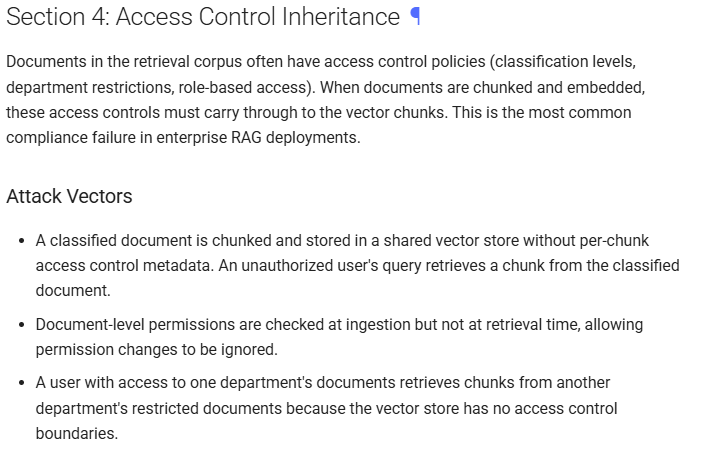
The OWASP RAG Security Cheat Sheet recommends carrying classification, owner, permitted-role, and tenant metadata into each vector chunk and enforcing authorization during retrieval. Source permission checks performed only at ingestion can become stale after a user’s access changes.
A minimum AI control set should include:
- Approved and inventoried sources and connectors.
- Source provenance and integrity checks before ingestion.
- Authorization metadata on every derived chunk.
- Retrieval-time authorization and tenant isolation before content reaches the model.
- Propagation of source revocation, reclassification, expiration, and deletion.
- Controls against poisoned documents and indirect prompt injection.
- Output validation and protection against restricted citations and source links.
- Defined retention for prompts, responses, embeddings, caches, and telemetry.
- Correlation IDs, source IDs, authorization outcomes, model versions, and tool outcomes in appropriately protected logs.
- Fail-closed behavior for high-risk authorization, source-integrity, and policy failures.
Use synthetic, non-sensitive material for permission and injection tests. Include allowed, denied, cross-tenant, revoked-user, deleted-source, poisoned-source, cache-leakage, and unsupported-question cases. Passing those cases is evidence for that test set, not proof that every future attack or leakage path is impossible.
The NIST Generative AI Profile is a voluntary companion to the AI Risk Management Framework that can help organizations consider generative-AI risks alongside their broader governance program. It is not a certification or replacement for product-specific security testing.
Worked example: secure a mixed-audience knowledge hub
The following Northstar Knowledge Hub is fictional. The controls and expected results illustrate a design and test method; they are not results from an actual vendor audit.
| Collection | Permitted audience | Publisher | Delivery paths | Key control | Proposed test and evidence |
|---|---|---|---|---|---|
| Public product help | Anyone | Support content team | Website, public search, approved chatbot | Editorial approval and safe publication | Signed-out page test, link check, version and approval event. |
| Customer account guidance | Authenticated customer tenant | Support operations | Customer portal, search, AI assistant | Tenant and object authorization | Tenant A and Tenant B test using the same synthetic document ID; authorization traces retained. |
| Employee procedures | Employees and approved contractors | Process owner | Intranet, Teams, enterprise search | Group access and offboarding | Revoke a test contractor and confirm page, attachment, search, and Teams denial. |
| Partner playbook | Named partner group | Channel operations | Partner portal and protected export | Partner-group isolation and export control | Denied partner direct-link and export test; export event and approval retained. |
| Security incident runbooks | Security response team | Incident-response owner | Restricted web and approved emergency access | Privileged access, integrity, audit, recovery | Denied ordinary employee, break-glass review, controlled edit, rollback, and restore record. |
| AI retrieval index | Derived from the source audience | AI platform owner with source owners | Generated answers and citations | Chunk-level authorization and deletion propagation | Revoked-user, cross-tenant, deleted-source, and cache-leakage tests with redacted traces. |
Proposed restricted-content access test
Create a synthetic runbook containing a harmless marker such as RUNBOOK-ACCESS-482. An authorized responder should be able to open the page and required attachment. An ordinary employee should not receive the marker through a direct URL, search snippet, export, notification, API, integration, or AI response.
Retain the test identities, timestamp, target, expected result, observed result, relevant audit events, and remediation ticket. Redact unnecessary personal information and secrets from the evidence packet.
Proposed deletion-propagation test
Create a synthetic customer document, allow it to enter the approved search and AI pipeline, and then remove it through the documented process. Verify the page, attachment, search result, vector chunks, caches, citations, and ordinary exports no longer expose it within the expected operational window.
Handle audit logs and backups according to the defined retention and legal-hold rules. Where immediate deletion from protected backups is unavailable, confirm the contractual expiry process, restore safeguards, and controls preventing deleted information from returning to active use.
Connect each control to a test and defensible evidence
A policy or feature description shows intent or capability. Operating evidence shows whether the control worked in the actual scope. Use a compact control-evidence register rather than collecting screenshots without context.
| Risk | Control | Test | Evidence | Owner | Review trigger |
|---|---|---|---|---|---|
| Unauthorized reading | Deny-by-default group and content authorization | Allowed and denied direct URL, search, file, API, and AI checks | Access matrix, configuration export, denial events, test record | Identity and platform owners | Role model, connector, or audience change |
| Unauthorized publication | Separated author, reviewer, and publisher roles | Attempt publication with each test role | Workflow configuration, approval ticket, publication history | Content governance owner | Workflow or privileged-role change |
| Untraceable bulk disclosure | Restricted and logged export capability | Authorized and unauthorized export attempts | Export approval, audit event, protected output location | Platform and security owners | Export format, plan, or role change |
| Stale or incorrect procedure | Accountable ownership and substantive review | Process-change scenario and expired-owner check | Review record, corrected article, supersession link | Business process owner | Underlying process or policy change |
| Content loss | Protected backup and tested restoration | Restore selected pages, files, permissions, and metadata | Restore record and recovered-content verification | Service continuity owner | Architecture or backup-provider change |
| AI disclosure | Retrieval-time authorization and tenant isolation | Cross-tenant, revoked-user, restricted-citation, and cache tests | Redacted trace with source IDs and authorization outcomes | AI platform and source owners | Model, index, connector, or permission change |
| Incomplete deletion | Documented cascading deletion and downstream inventory | Delete synthetic source and inspect secondary stores | Deletion events, index checks, cache results, vendor confirmation | Privacy and platform owners | New copy, subprocessor, or retention rule |
Test frequency should reflect information sensitivity, change rate, audit commitments, incidents, and system changes. Rerun relevant controls after changes to identity, permissions, content structure, integrations, AI models, indexes, vendors, or applicable requirements.
Protect the evidence itself. Logs, configuration exports, screenshots, contracts, and audit packets can expose personal information, architecture details, privileged roles, or security weaknesses. Store only what is necessary and restrict it to authorized reviewers.
Prioritize the implementation
- Inventory the real boundary. Include articles, files, versions, search, exports, integrations, backups, and AI-derived copies.
- Classify content and audiences. Identify public, customer, partner, employee, privileged, personal, and regulated material.
- Correct identity and access first. Remove shared accounts, excessive grants, public links, stale guests, and unclear administrative roles.
- Protect publishing and high-risk changes. Assign owners and apply review, approval, version, and rollback controls according to risk.
- Establish useful audit events. Confirm the required events, fields, protection, retention, export, and alerting before an incident occurs.
- Test recovery and deletion. Restore representative content and trace synthetic deletion through secondary copies.
- Complete vendor and contract review. Verify service scope, assurance evidence, subprocessors, shared responsibilities, incident terms, and exit conditions.
- Extend the same controls to AI and integrations. Do not allow a new delivery path to bypass source permissions or lifecycle rules.
- Maintain a control-evidence register. Record owners, tests, results, exceptions, remediation, and review triggers.
The strongest knowledge-base security program is not the one with the longest feature checklist. It is the one that knows where its information goes, limits each path to the intended audience, detects and responds to failures, restores critical guidance, and can produce current evidence for the controls that actually matter.
Authoritative security, privacy, assurance, and regulatory sources checked on November 2, 2026. This guide provides general information and does not constitute legal advice or a certification of any product or deployment.